You find a beautiful wool sweater, try it on, and love the look. Then the itching starts. Your neck feels scratchy, your arms feel uncomfortable, and suddenly you want to take it off. You do not have to give up cozy winter knitwear right away. The right base layer, gentle fabric care, and a better sweater choice can make a big difference.

Learning how to stop a wool sweater from itching starts with understanding the fabric. Some wool fibers feel rougher against your skin than others. Washing methods, sweater construction, and your personal skin sensitivity also matter. This guide shares practical ways to make wool sweaters more comfortable. You will learn what to wear underneath, how to wash wool safely, and when another fabric might suit you better.
Quick Answer: How Do You Stop a Wool Sweater From Itching?
The easiest first step is to wear a soft layer between your skin and the wool. Try a cotton T-shirt, a smooth long-sleeve top, or a comfortable base layer with a neckline that covers the itchy area.
If the sweater still feels scratchy, check its care label. A gentle wash with a suitable wool detergent may help remove residue and refresh the fibers. However, washing cannot change every wool fiber or make every sweater soft.
For future purchases, look for softer wool types, such as fine merino, and try the garment on before buying when possible. If a sweater causes persistent irritation, stop wearing it and choose a more comfortable fabric.
1. Wear a Soft Base Layer Under Your Sweater
A base layer is one of the simplest ways to make an itchy wool sweater easier to wear. It creates a barrier between your skin and the sweater fibers.
Choose a shirt that feels comfortable against your skin. Cotton works well for many everyday outfits. A smooth, lightweight long-sleeve top can also help when your arms feel itchy.
Try these combinations:
- A white cotton T-shirt under a beige crewneck sweater.
- A black long-sleeve top under a charcoal wool cardigan.
- A fitted cotton shirt under a relaxed winter pullover.
- A smooth high-neck top under a sweater with an itchy neckline.
- A lightweight base layer beneath a wool sweater dress.
Choose a neckline that covers the areas where you feel the most discomfort. If your neck gets itchy, a crewneck or mock-neck base layer may help.
Keep the fit comfortable. A base layer should let you move freely without bunching under your sweater.
Stylist tip: Match your base layer to your sweater’s color for a clean, coordinated outfit. A cream shirt under a camel sweater creates a soft, classic combination.

[ALT TEXT: Soft cotton base layer under a wool sweater to reduce itching]
You must try these 10 Comfortable Christmas Night Party Outfits for Curvy Women
2. Wash Your Wool Sweater With the Right Method
Sometimes, washing can help refresh a sweater and remove residue. However, wool needs gentle care. The wrong method can cause shrinking, stretching, or a rougher feel.
Always read the garment’s care label first. Some wool sweaters allow machine washing, while others require hand washing or professional cleaning.
For a sweater that allows hand washing:
- Fill a clean basin with lukewarm water.
- Add a small amount of suitable wool detergent.
- Gently move the sweater through the water.
- Follow the detergent instructions for soaking time.
- Rinse carefully as directed by the product.
- Press out excess water without twisting or wringing.
- Lay the sweater flat on a clean towel to dry, unless its label says otherwise.
For machine-washable wool, use the recommended wool or delicate cycle. Turn the garment inside out if its care instructions allow it.
Avoid hot water, harsh detergents, and rough handling. These can damage wool fibers and affect the sweater’s shape.
Pro tip: A mild wool detergent can help care for the fabric, but it cannot guarantee that coarse wool will stop itching.

[ALT TEXT: Gentle hand washing method for caring for an itchy wool sweater]
3. Use Conditioner and Fabric Softener Carefully
You may see online tips recommending hair conditioner or fabric softener for scratchy sweaters. These methods do not suit every wool garment.
Some wool-care guidance permits a small amount of rinse conditioner, while other wool products specifically advise against fabric softener. The correct choice depends on the garment and its manufacturer.
Before trying any treatment, check the care label and product instructions. If the label does not support the method, skip it.
Keep these points in mind:
- Use a detergent designed for wool when the label allows washing.
- Avoid bleach and harsh cleaning products.
- Do not add extra products in the hope of making the sweater softer.
- Never combine random household ingredients in a wash.
- Test any approved treatment on an inconspicuous area when appropriate.
You can often improve comfort without adding a treatment at all. A soft shirt underneath may solve the problem more reliably than experimenting with the fibers.
If the sweater still scratches your skin, focus on layering or choose another fabric.
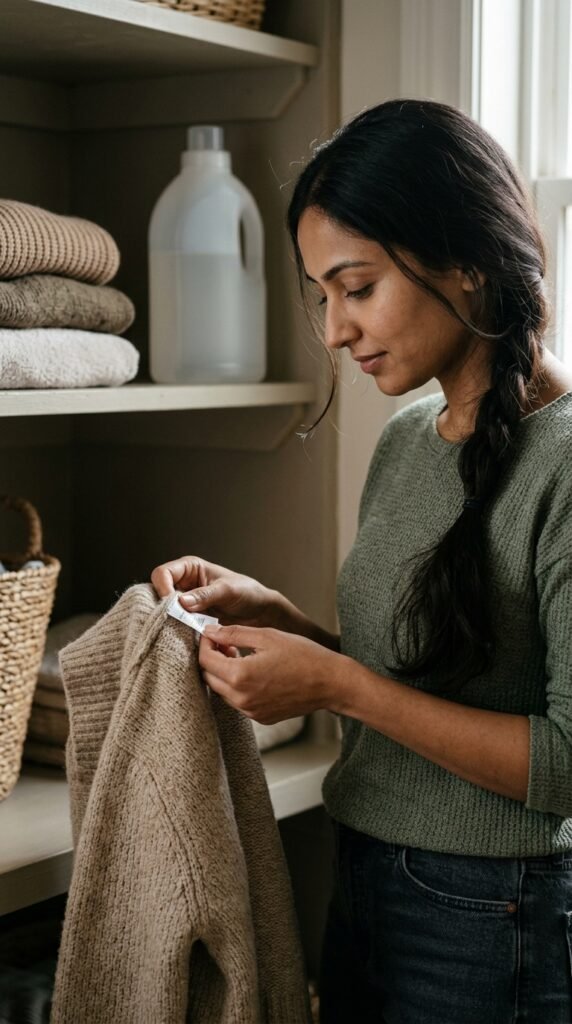
[ALT TEXT: Choosing suitable wool detergent and checking sweater care instructions]
4. Choose Softer Wool for Your Next Sweater
Not all wool feels the same. Fiber fineness, yarn construction, knit texture, and finishing can affect how a sweater feels against your skin.
Fine merino wool often feels softer than coarser traditional wool. Cashmere can also feel soft, although quality and construction vary. Some people still find certain fine wool garments irritating.
When shopping, look beyond the word “wool” on the label.
Check these details:
- Fiber content: Read whether the sweater contains wool, merino, cashmere, cotton, or a blend.
- Texture: Gently feel the fabric if the store allows it.
- Neckline: Look for a finish that feels comfortable against your neck.
- Seams: Check whether thick seams or labels rub your skin.
- Return policy: Make sure you understand the rules before removing tags or wearing the garment.
If you shop online, read the full fiber description and customer feedback about softness. Reviews can help, but individual comfort varies.
You can also choose cotton knitwear or a soft synthetic blend if wool consistently bothers you.
Stylist tip: Try the sweater with your usual base layer before deciding whether the fit and texture work for you.

[ALT TEXT: Comparing wool and cotton knitwear when choosing a comfortable sweater]
Try these 10 90s Christmas Night Party Hairstyles That Last Till Midnight
5. Protect Your Neck, Wrists, and Other Sensitive Areas
A sweater may feel comfortable across your body but scratch around the neck, wrists, or elbows. These areas often touch the fabric directly or experience repeated rubbing.
Start by identifying exactly where the discomfort occurs. Then adjust your layers to cover that area.
Try these outfit ideas:
- Wear a crewneck shirt under an itchy crewneck sweater.
- Pair a cardigan with a long-sleeve cotton top.
- Choose a collared shirt under a V-neck sweater.
- Wear a smooth base layer beneath wool sleeves.
- Try a scarf only if its fabric feels comfortable against your skin.
Check the sweater’s seams and labels too. A rough neck label or thick seam can cause discomfort even when the wool itself feels soft.
Do not cut seams or remove labels without checking how they affect the garment. You could damage the sweater or make the irritation worse.
If your skin becomes red, sore, or persistently itchy, stop wearing the garment. Consider seeking medical advice if the reaction continues or feels severe.

[ALT TEXT: Layering a collared shirt under a wool sweater for a more comfortable neckline]
6. Dry and Store Wool Without Damaging It
The way you dry and store a sweater can help preserve its shape and texture. Wool can stretch under its own weight when wet, so hanging a wet knit sweater may distort it.
After washing, follow the care label. Many wool sweaters benefit from flat drying in a shaded, ventilated area.
Use this simple routine:
- Gently press out excess water.
- Place the sweater on a clean, absorbent towel.
- Shape it carefully to its original dimensions.
- Let it dry flat away from direct heat.
- Fold the dry sweater for storage.
Avoid wringing the garment or placing it directly on a hot radiator. Do not tumble-dry a sweater unless its care label permits it.
Between wears, let the sweater air out when appropriate. Wool garments often need less frequent washing than many other fabrics, depending on use and care instructions.
Store knitted sweaters folded rather than hanging them for long periods. This helps reduce stretching around the shoulders.
These habits will not change every sweater’s natural texture, but they can help keep your knitwear in good condition.

[ALT TEXT: Flat drying and folding a wool sweater to maintain its shape]
7. Know When to Choose Another Fabric
Sometimes, a wool sweater remains uncomfortable despite careful washing and thoughtful layering. That does not mean you have cared for it incorrectly. Some fibers simply do not suit your skin. If the sweater continues to itch, you can still create a cozy winter outfit with another material.
Consider these alternatives:
- Cotton knitwear: A useful everyday option with a familiar, soft feel.
- Cotton-blend sweaters: These may offer a different texture and fit.
- Soft synthetic knits: Options vary, so check the feel and fiber content.
- Fine merino: Worth trying if you want to give wool another chance.
- Cashmere blends: Often soft, but prices and textures vary.
You do not need to buy a replacement immediately. First, try a comfortable base layer and check whether the sweater’s care label allows gentle cleaning. If it still feels scratchy, reserve it for layering over a long-sleeve shirt or pass it on if it no longer suits you. Your winter wardrobe should support your comfort. You can enjoy cozy outfits without forcing yourself to wear a fabric that irritates your skin.
You must try these How to Stop Static in Winter Clothes

Common Mistakes to Avoid
Using hot water: Hot water and unsuitable washing methods can damage or shrink wool. Follow the care label.
Wringing the sweater: Twisting wet knitwear can stretch or distort its shape. Press water out gently instead.
Trying every internet hack: Conditioner, vinegar, and other household treatments do not suit every garment. Use approved care methods.
Assuming all wool feels the same: Fiber type and construction affect texture. Try different materials before buying.
Ignoring persistent irritation: A base layer may help, but it cannot solve every skin reaction. Stop wearing a garment that keeps irritating you.
Frequently Asked Questions
Why does my wool sweater itch so much?
Some wool fibers feel rough against the skin, depending on their thickness and structure. Seams, labels, and fabric finishes can also cause discomfort. Personal skin sensitivity matters too. A soft base layer may help, but not every itchy sweater can become comfortable.
Does washing a wool sweater make it softer?
Gentle washing may remove residue and refresh a sweater. However, washing cannot guarantee softer fibers. Always follow the care label, use a suitable detergent, and avoid harsh handling that could damage the knit.
Can I use hair conditioner on an itchy wool sweater?
Do not assume hair conditioner suits every wool garment. Products and garment finishes vary, and some treatments may leave residue or affect the fabric. Check the manufacturer’s care instructions before trying a treatment.
Is merino wool less itchy than regular wool?
Fine merino wool often feels softer than coarser wool because its fibers can be finer. However, individual sweaters vary, and some people still find merino irritating. Check the fabric and try it against a comfortable base layer when possible.
What should I wear under an itchy wool sweater?
Try a soft cotton T-shirt, a smooth long-sleeve top, or a comfortable base layer. Choose a neckline that covers the itchy areas. The best option feels comfortable, fits without bunching, and works with your sweater.
Conclusion
Learning how to stop a wool sweater from itching starts with a simple change: add a soft layer between the wool and your skin. Gentle care may help refresh the sweater, but its natural fibers still matter. Check care labels before washing or trying any softening treatment. If the sweater keeps irritating your skin, choose cotton knitwear or another comfortable fabric. You deserve winter clothes that feel as good as they look. Save this guide for your next sweater-care day.
Which part of a wool sweater bothers you most: the neck, sleeves, or the whole fabric?
Related reading:
- How to Layer Clothes for Winter Without Feeling Bulky
- How to Care for Winter Sweaters and Knitwear